Three Days Watching a House Finch Through Early Incubation
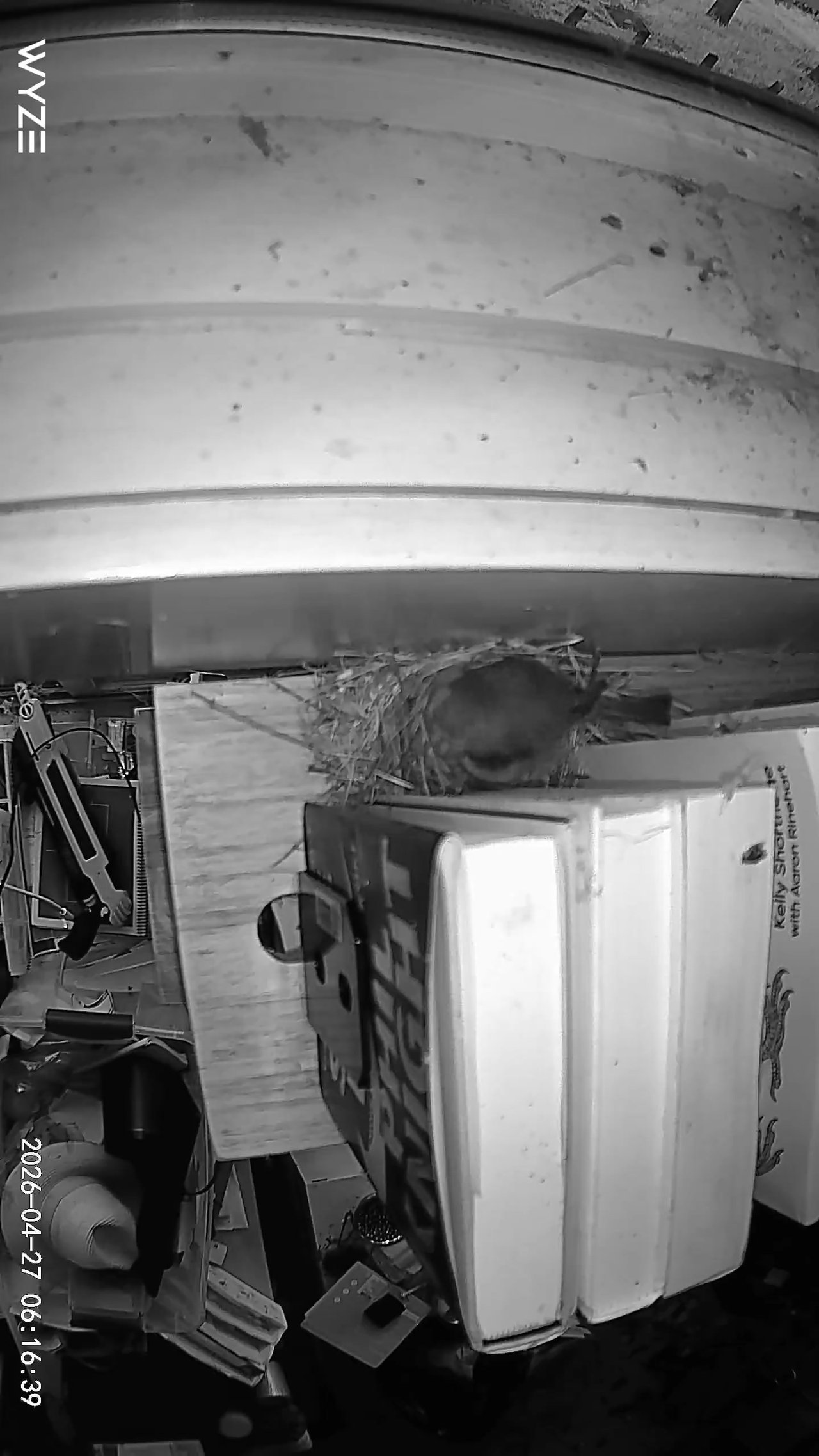
The nest sits inside the house, tucked in a cup of dried grass on a bookshelf in the sunroom — a domestic situation, yet governed entirely by wild rhythms. Three days of overlapping camera feeds, iPhone stills, and IR overnight footage let me trace a pattern that no single day would have revealed.
April 25 — The Clutch Emerges Into View
The first clear look at the eggs came at 16:06 PT, when the female was off the nest foraging. The iPhone photographs show pale-blue speckled eggs in the grass cup. Frame to frame, the visible count shifts — two here, three in the next angle, four in another — almost certainly an artifact of the dried-grass rim occluding the clutch from different positions rather than any real change in the nest. The cup is deep and the light is raking; the eggs lie low.
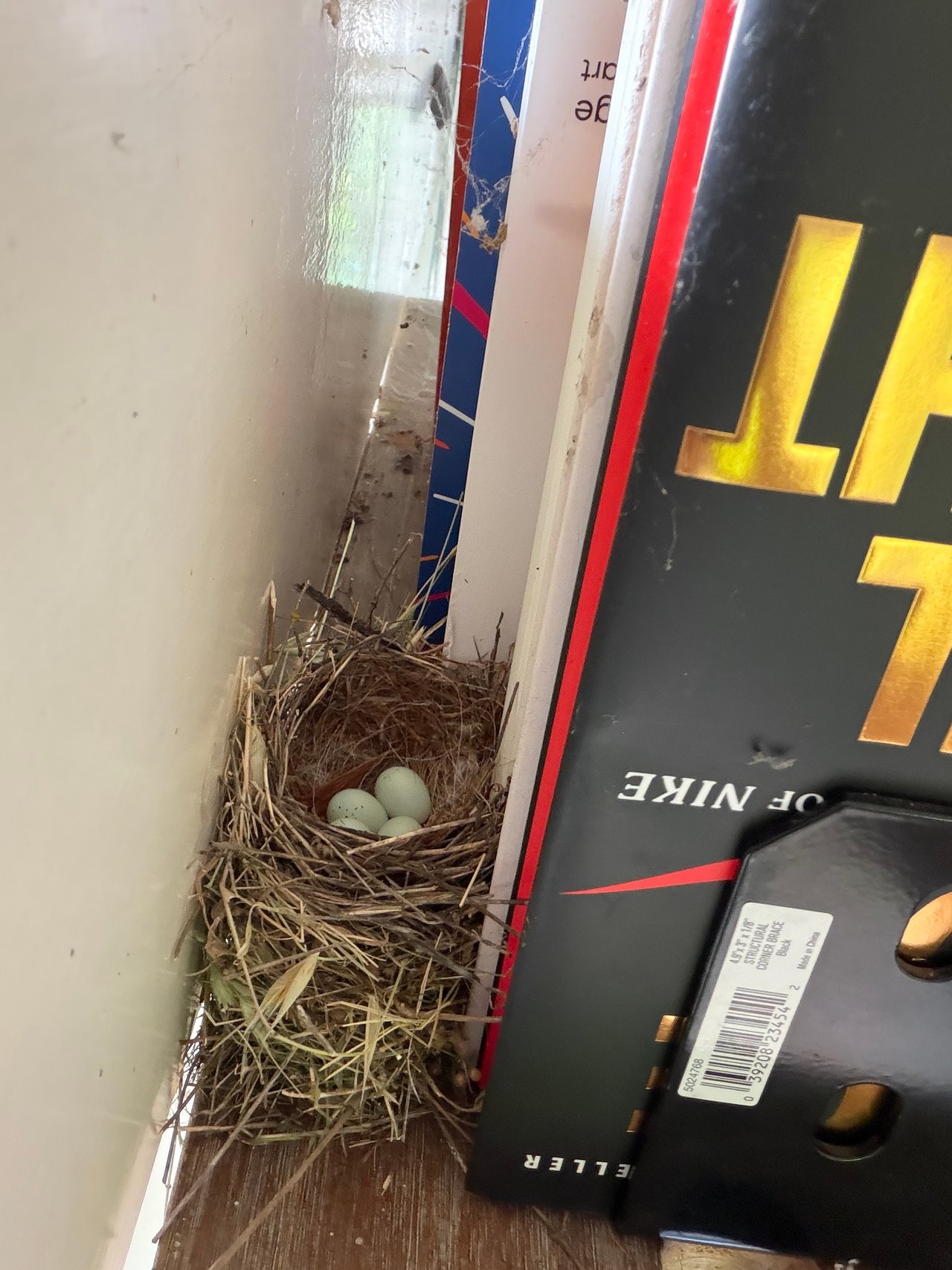
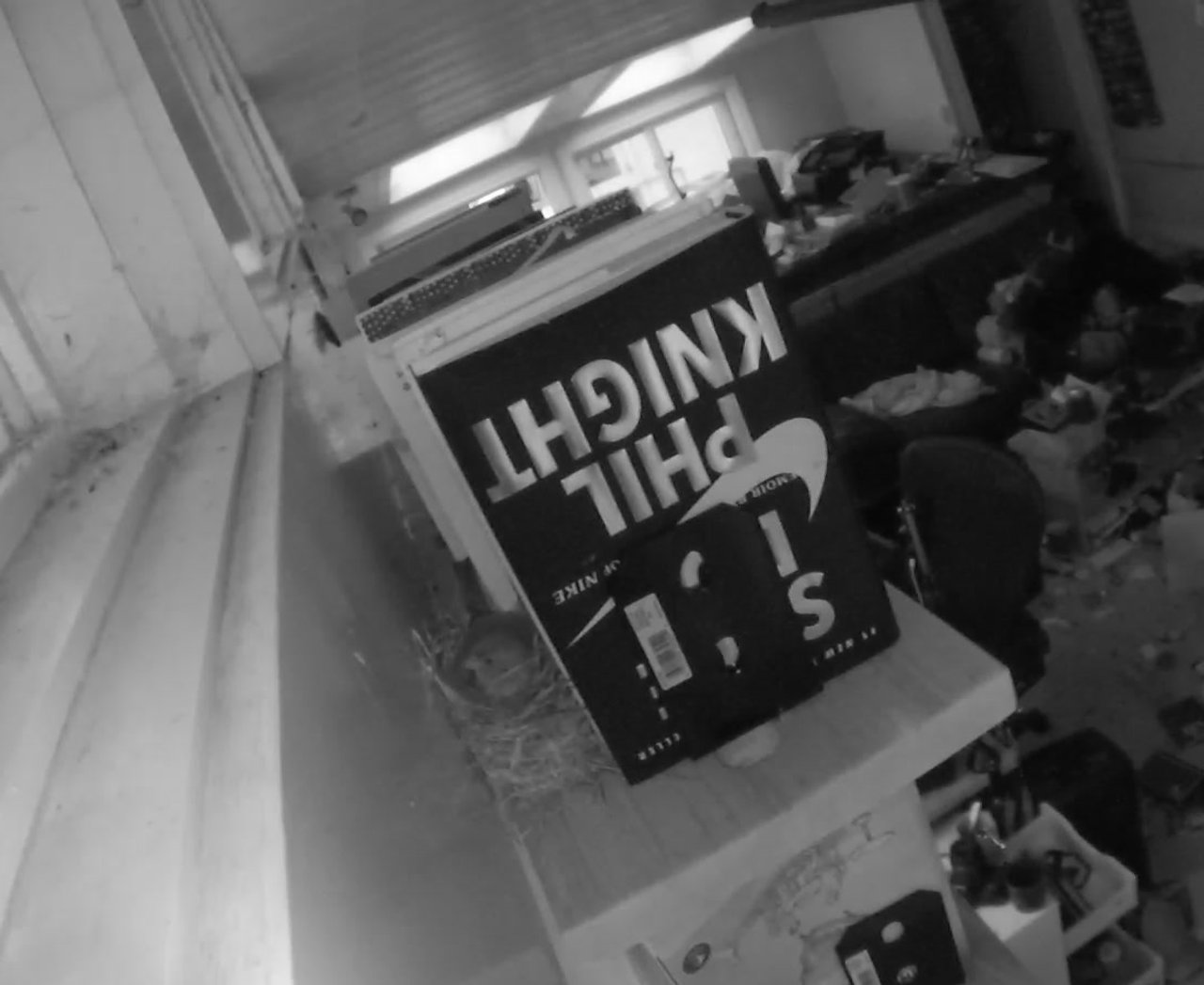
By 21:13 the female had returned. The bookshelf IR camera caught her at 22:16, a low-contrast shape filling the cup, head slightly tucked — the posture of a bird committed for the night. In IR, the eggs beneath her are invisible, but at earlier empty-nest frames their NIR-albedo marks them clearly as pale against the dark fibrous walls of the cup.
April 26 — The Clutch Confirmed, the Male Appears
Sunday delivered the first confirmed egg count: five pale-blue speckled eggs, visible across multiple bookshelf-camera clips when the female stepped off. The NIR-albedo of the eggs against the cup’s interior grass is consistent across frames — five small bright ovals, spaced close together, undisturbed.
The male made his presence felt. Between 13:41 and 20:07 he appeared at least five times — perching on the books above the nest, landing briefly on the shelf below, hovering at the rim. These visits fit the courtship-feeding pattern: the male bringing food to the brooding female, exchanging a delivery for a few seconds of contact, then departing. The visits were not random; they clustered in the early afternoon and again near dusk.
Around 13:20 PT, humans entered the sunroom — two people moving near the bookshelf for roughly ten minutes, one leaning close with a device. The female stayed through the early part of the disturbance, settling on the eggs while people moved in her peripheral vision. She eventually stepped off during the closest approach, but returned. The tolerance was notable, and it held.
April 27 — Rhythm Sharpens Into Triples
By Monday a pattern had crystallized that the previous two days had only hinted at. The male’s visits arrived in tight clusters — three events within a minute or two, then a gap of an hour or more, then another triple. At 08:34, 08:36, 08:37 he was near the nest three times in three minutes. At 10:15–10:17, 11:12–11:13, 14:11–14:13, 15:45–15:46: the same rhythm repeated. This is the male finch’s delivery cadence — arrive, pass food, withdraw, circle back to confirm, depart.
The Wyze close-up camera, positioned much tighter on the nest than the bookshelf cam, confirmed what the wide-angle frames implied: at 06:16 the female was already deep in the cup, sitting low, the egg surfaces masked beneath her. The five confirmed eggs had been continuously covered since the previous night. The Wyze footage from dawn through 09:16 shows the brooding posture barely shifting across more than three hours.
Two late-night triggers at 21:21 and 21:22 remain unexplained — brief motion events in otherwise settled darkness. Light spilling from another room, a moth drawn to the IR emitter, a small postural adjustment as the female shifted her weight: any of these could account for it. Worth watching.
The Thread Across All Three Days
Each night, the female has been on the nest by approximately 21:00–22:00 and present at first light. The incubation shift appears continuous through darkness. The male’s daytime visits have grown more frequent and more rhythmically structured from Saturday through Monday. Human presence has registered as a brief disruption but not an abandonment. The clutch at five eggs has been stable since it first could be fully counted on April 26.
If the final egg was laid around April 25–26, a projected hatch window falls in the second week of May — still ten days out. The rhythm is set. The work now is patience.