Nest Relief, Male Intrusion, and the Steady Five-Egg Vigil
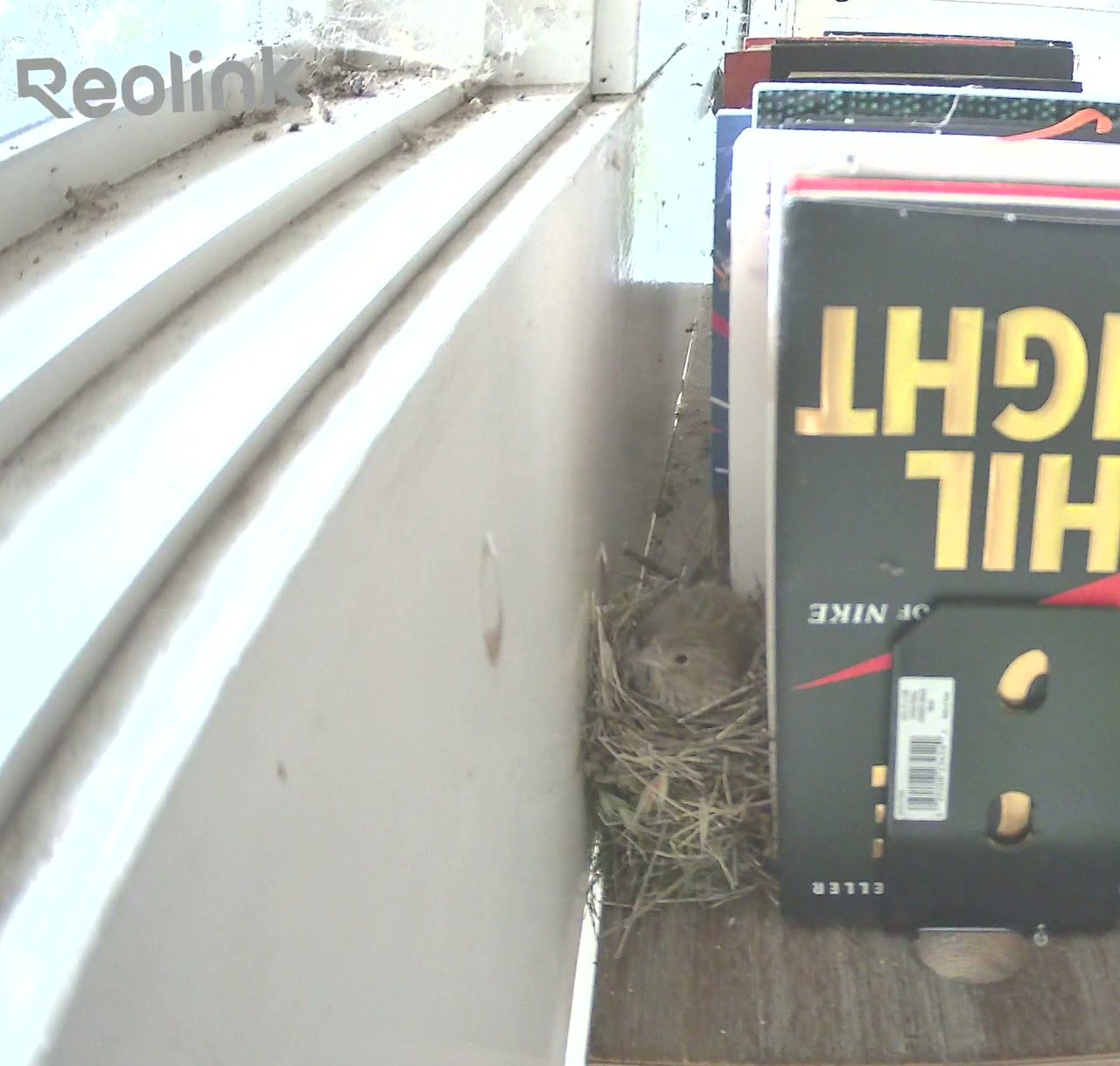
The old bookshelf camera logged its final useful frames on the evening of April 28, handing off to the Reolink as the female settled in for the night. That transition — both cameras catching the same motion event at 19:55 from different angles — was itself a kind of punctuation mark, a seam in the record. What the record shows across these three days is not merely routine incubation but a pair working out, or perhaps renegotiating, the terms of their partnership.
April 28 began in the blue pre-dawn: the female was on the cup at 06:00, off by 06:39, and the rhythm of short shifts held through the morning. By mid-afternoon, two clusters of activity had pressed themselves into the log. The first, from 15:24 to 15:30, coincided with human presence at the camera — six motion events in six minutes while someone repositioned the lens; the nest sat empty those minutes, all five eggs revealed in the cup. The second cluster came at dusk, seven events between 18:25 and 18:32, the male shuttling in for what read as a final feeding visit before the female locked down for the night. By 20:00 the Reolink had her on the cup in infrared, low incubation posture. The NIR-albedo of the five pale eggs in those evening frames was notably high — their speckling catching the sensor uniformly, each one a small bright oval in the cup.
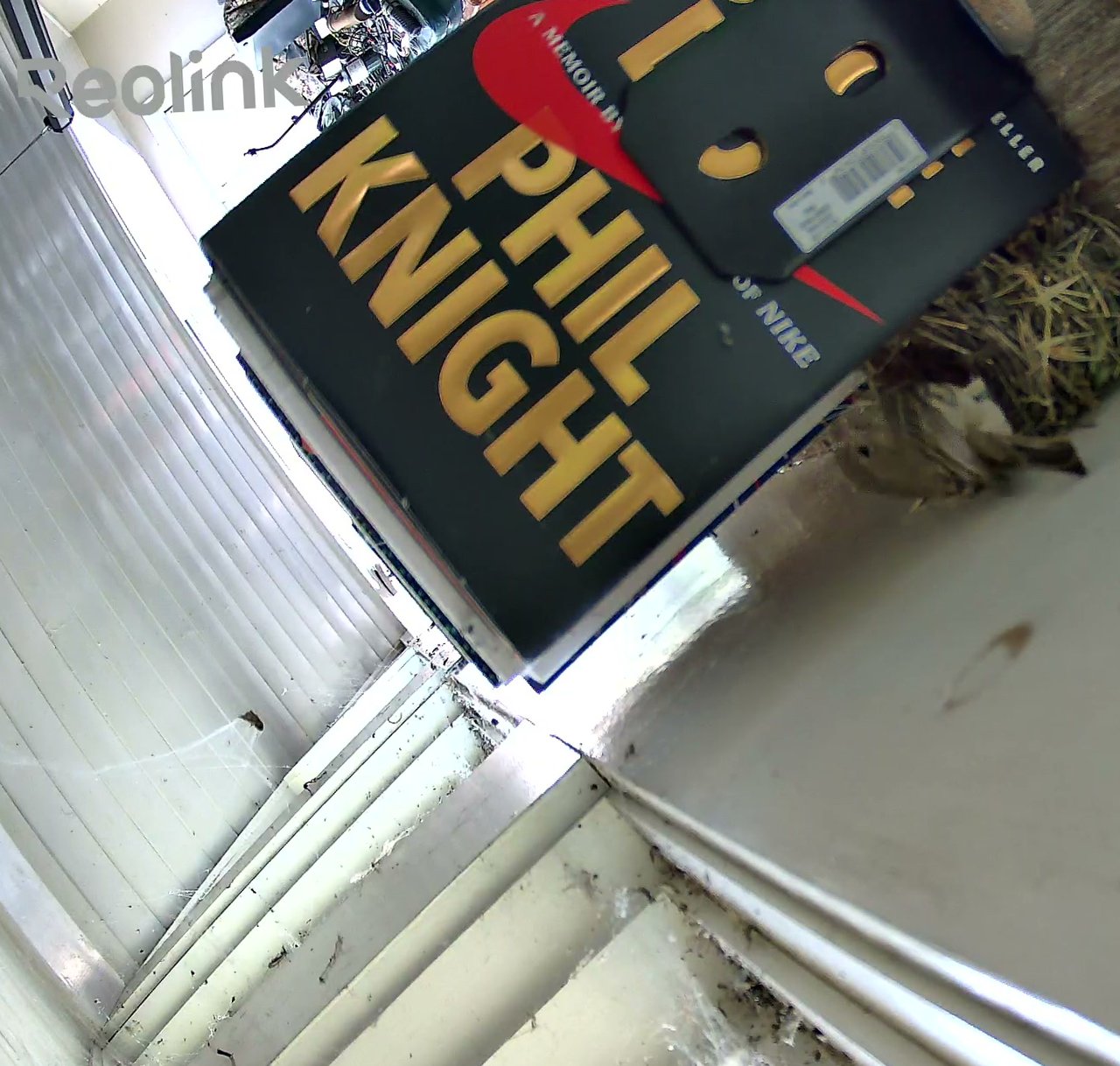
April 29 opened with the female already incubating at 06:11, and the first hint of the day’s strangeness came at 10:33. The cup briefly emptied, and then the male dropped in — not to the rim, not to the shelf, but into the cup itself, sitting where the female sits, wings slightly spread over the clutch. He repeated this at 11:33, alone in the cup for a full minute, and again around 12:43. House Finch incubation is, in the literature, strictly the female’s work; the male’s role is to provision her, not to brood. Yet three times on this Wednesday he occupied the cup. Whether he was expressing some instinct not fully suppressed, waiting for the female to return, or simply experimenting cannot be resolved from the clips — but it is a pattern worth naming. By evening the roles had resolved again: male at the rim at 18:33, close beside the female at 19:44 and 19:45, and by 20:02 she was down for the night.
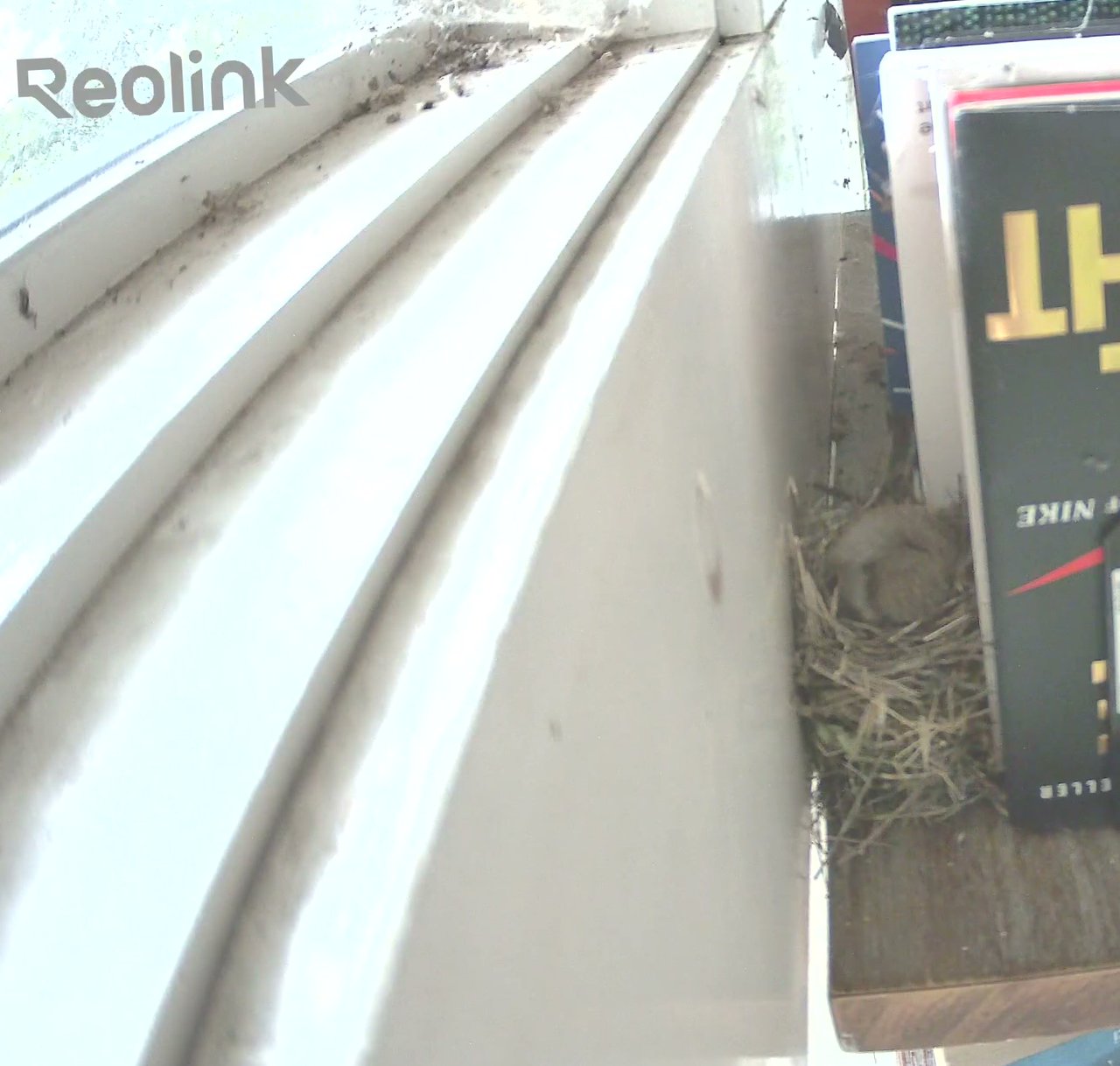
The camera angle on the 29th showed only two eggs — the clutch geometry hiding the others behind the cup wall — though five had been documented the day before and would be confirmed again the next afternoon. This is a useful reminder: absence from the sensor is not absence from the nest.
April 30 restored a more orthodox rhythm. Morning visits from the male at 08:09, the female incubating steadily into the afternoon. At 15:09 the male arrived at the rim and departed within seconds; at 15:10 the female dropped into the cup as he left — a clean, almost choreographed handoff. At 17:09, with the male perched beside an empty cup, all five eggs were again visible, their NIR-albedo signatures unchanged from two days prior, small bright ovals holding the same steady geometry. Evening followed the now-familiar arc: male at the rim at 18:21, on the shelf below at 19:18, the female settled through the night.
What the three days reveal in synthesis is a pair in transition. The male’s presence at the nest has intensified across the period: brief lateral visits on the 28th, three intrusions into the cup itself on the 29th, regular close escort appearances on the 30th. The female’s incubation, meanwhile, has grown more disciplined — the long gaps of the 28th have contracted, her sessions lengthening. She is on the eggs more; he is circling closer. Five eggs sit at the center of both trajectories, patient and unchanged, their NIR-albedo a small steady brightness at the hub of everything.