Field dispatch
The Held Breath: Three Days Before the Crossover
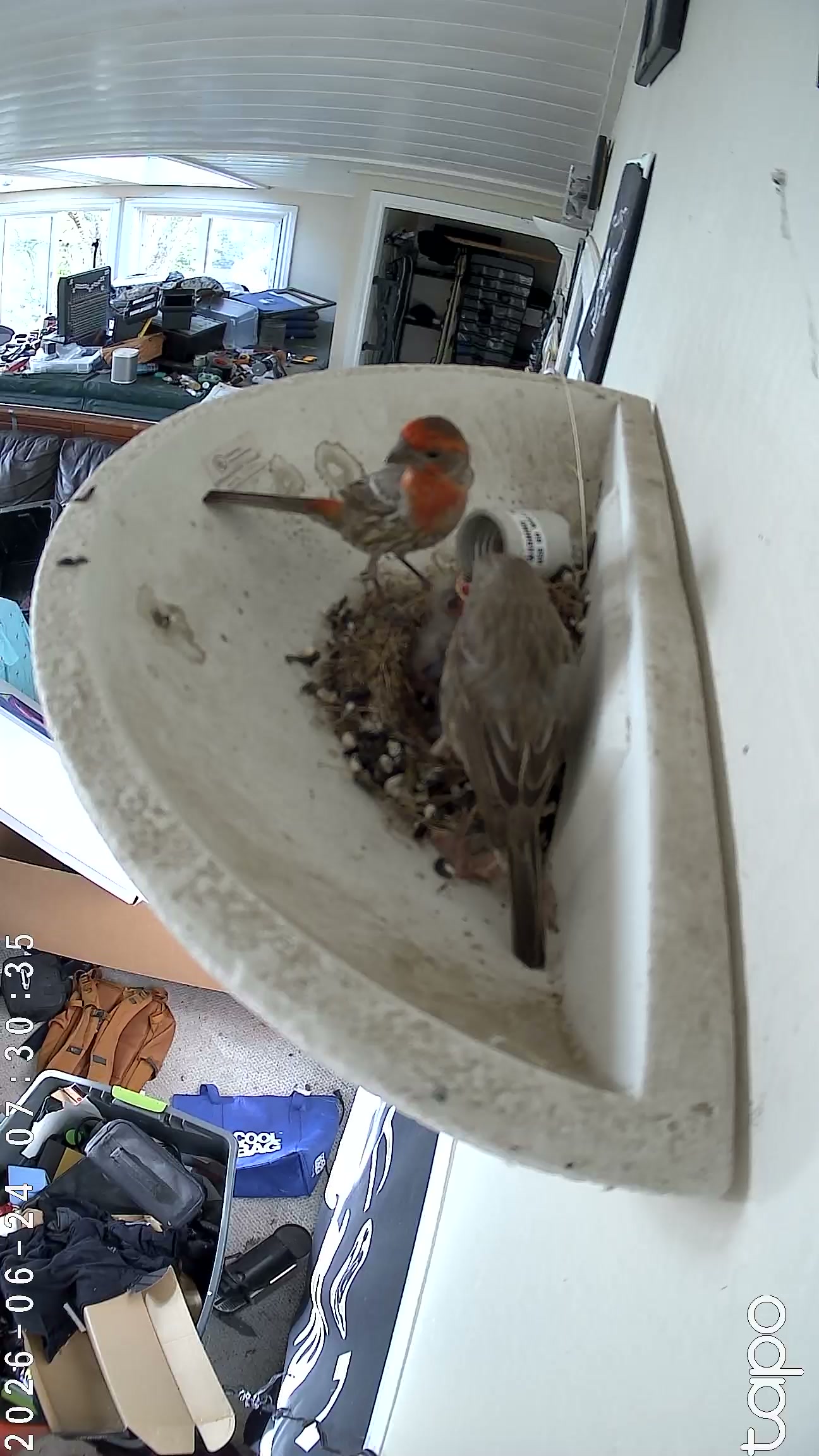
The pattern that stitches these three days together is not dramatic — it is, in fact, the opposite of drama. It is a held breath. The nest in the sunroom sconce stands at the edge of a transition that has not yet arrived: the crossover, somewhere around days seven through nine post-hatch, when the chicks’ own metabolisms will shoulder enough of their thermal burden that the female can step back from constant brooding and both adults will shift their energies fully toward provisioning. We are not there yet. But the approach is legible in the numbers.
On June 22, the cameras logged 522 motion clips. By June 23, that count had dropped to 374. By June 24, it had fallen to 234. Read one way, this looks like declining activity. Read more carefully, it looks like deepening stillness — the female settling into longer, unbroken bouts on the cup, generating fewer motion events because she is simply there, solid and unmoving, the way a stone is unmoving on a riverbed. The chicks beneath her are still largely dependent on her body’s radiant shelter to maintain their own heat budget.
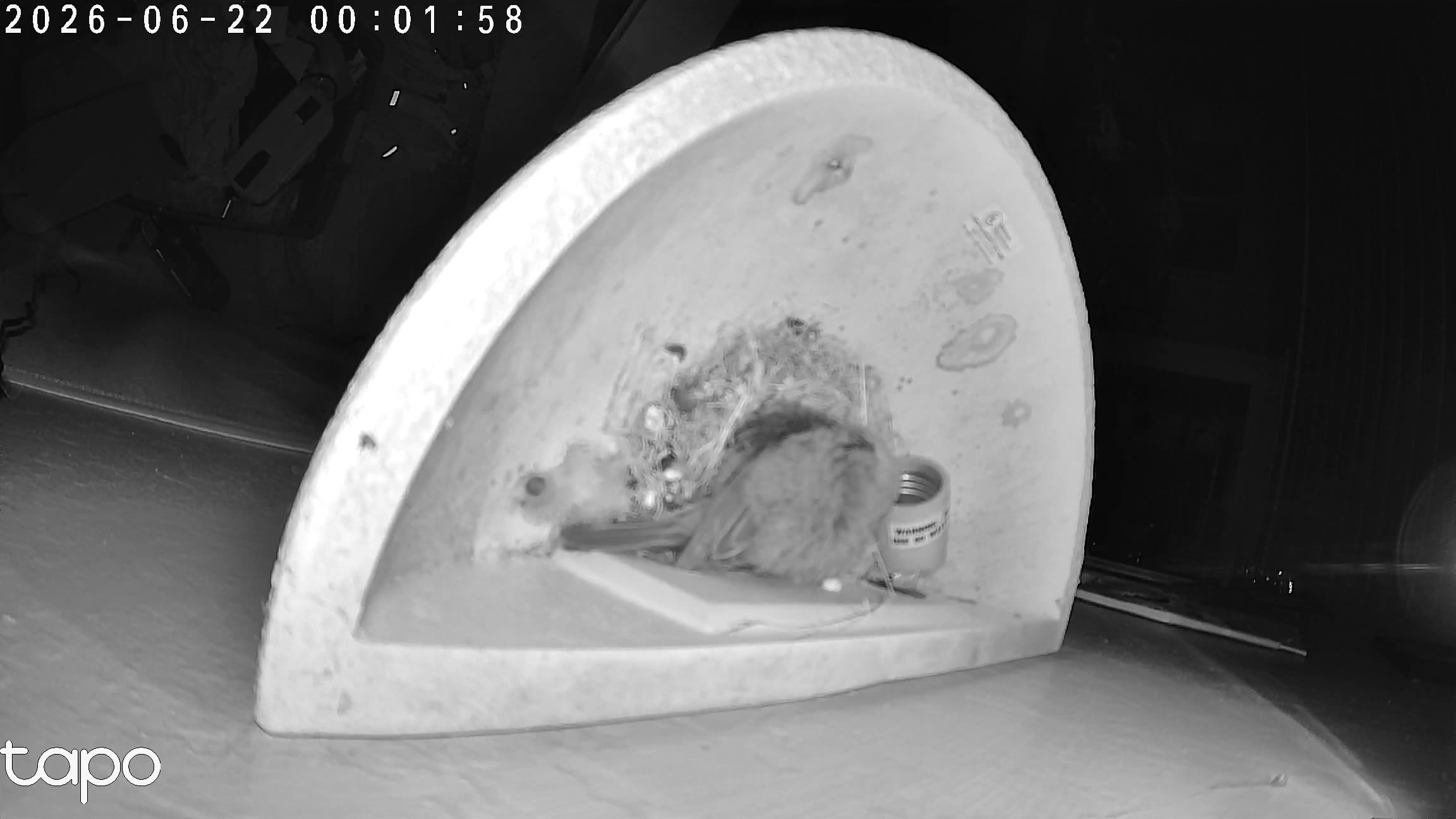
The nights anchor this picture. All three sessions began with the female confirmed on the nest within the first minutes after midnight — at 00:01 on June 22, at 00:11 on June 23, at 00:00 on June 24, the cameras catching her settled before the clock had barely registered a new day. By the small hours, a chick’s head would occasionally be visible at her flank, eyes shut, the bird-world’s equivalent of sleep. The female barely moved. It is the posture of something that has made a decision and is holding to it past all comfort.
That stillness broke on the morning of June 22. Across the hour after eight the cameras caught the brood in disarray — a nestling worked out of the woven bowl and onto the bare floor of the cup, the female returning again and again to a clutch that would not settle. A little after nine o’clock, one of the five was pushed clear of the nest entirely, and it did not survive. There is no villain in the frame and no certain cause; only the ordinary, unsentimental arithmetic of a wild brood, which a five-chick House Finch nest pays more often than it doesn’t. The nest closed over the gap the way nests do. Four remained, and the female was back on them by 09:15.
The feeding visits are the thread pulling toward the future. Ten provisioning events on June 22; twenty-six confirmed on June 23, including a compressed cluster between 07:45 and 08:48 that speaks to the male’s urgency once the light was sufficient to forage. The daylight budget is nearly at its annual ceiling — 14 hours and 47 minutes on each of these three days, the same generous ration, as if the calendar had paused. The adults are using every hour. On June 24, the recorded visits at 06:33, 07:30, and 11:41 represent only the documented peaks; the underlying rhythm of provisioning has been building all week.
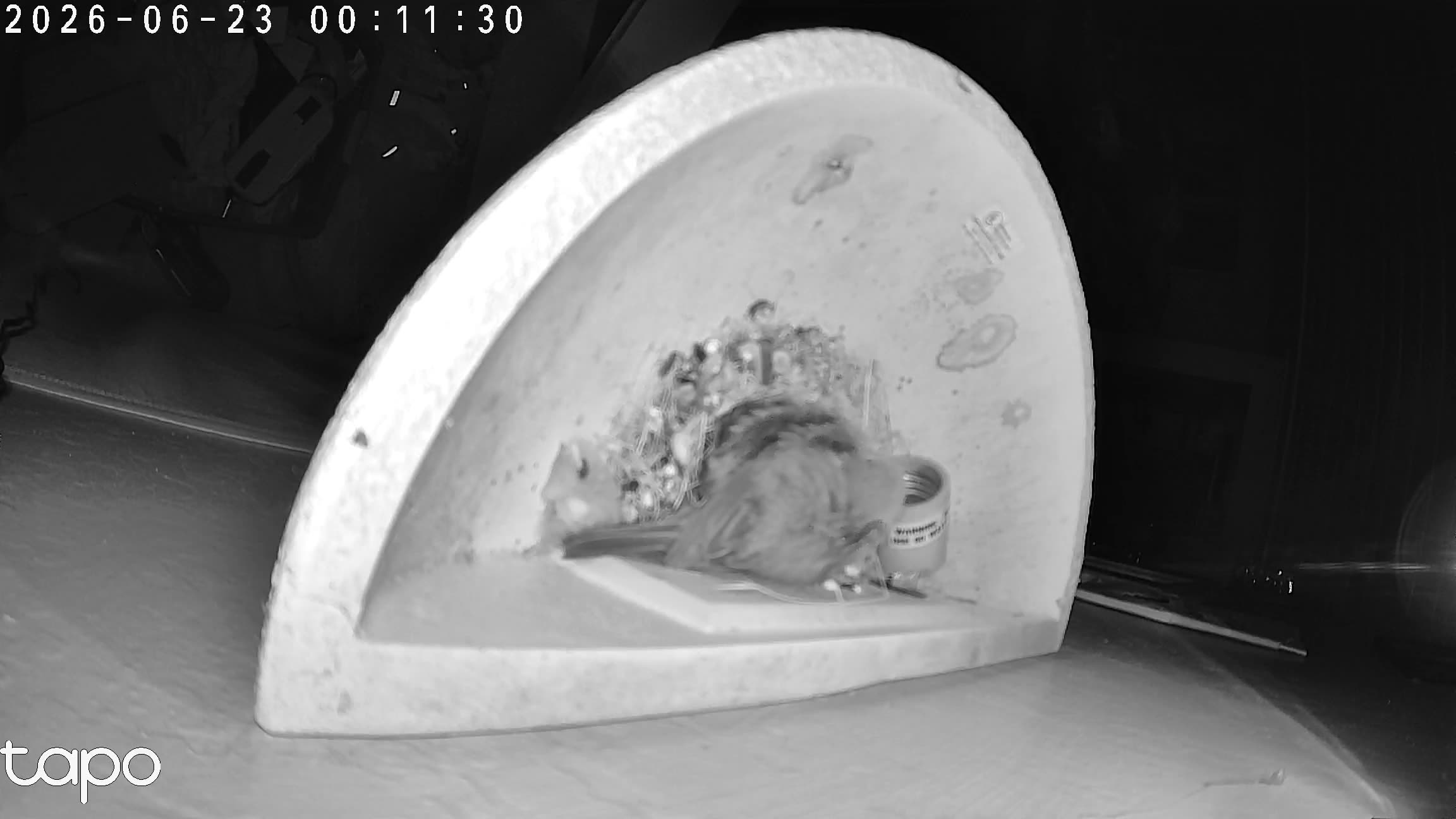
What the camera cannot show is what brooding feels like from the inside of the cup. But it can show the female’s silhouette at 05:52 on June 23 — the slight lift as a chick’s head breaches the surface of her feathers, then the settle back down, the two forms reassuming their single shape. Or the frame at 00:42 on June 24, a chick visible to the left of her body, edging toward the nest wall, and then the next clip, tucked back under. These small assertions and retreats are the diary of creatures not yet ready for the world’s full exposure.
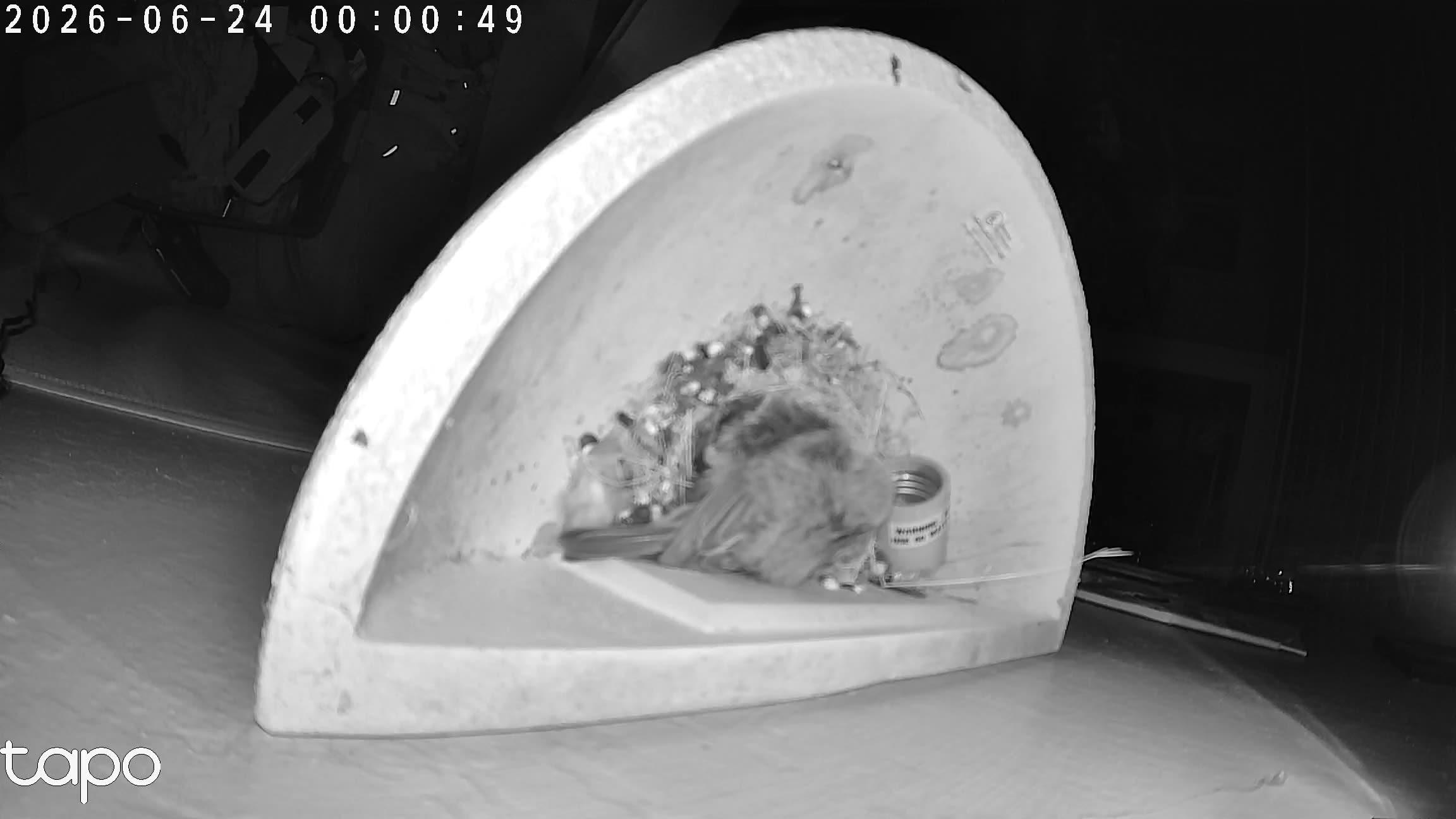
The crossover has not come. But the nest is learning its own appetite. The four chicks are six days old. Their pin feathers are still furled. The female’s brooding remains the primary grammar of this place, the sentence the whole enterprise turns on. And yet the feeding visits accumulate, the male’s appearances at the cup grow more purposeful, and the stillness recorded in the declining clip counts is not the stillness of stagnation but of something coiling — the quiet before the nest tips, finally, from shelter into launch. Four of them now, where there had been five.