Day 20
The Hatch
The female brooded tight all night. Every overnight clip from the camera that looks straight down into the cup shows the same posture — her body pressed flat across the bowl, the contents hidden underneath her — from the first capture just after midnight through to first light. That is not how she spent the previous ten nights of incubation, when she sat but shifted, stood, turned the eggs, took her stretches off the cup. On the night of the sixteenth into the seventeenth she did not get up. Something was changing under her.
Not quite yet, though. At 01:18 PT, in one of the rare frames she stepped off, the cup was still whole: five eggs, pale and intact, exactly as they had sat since the clutch was completed on June 6.
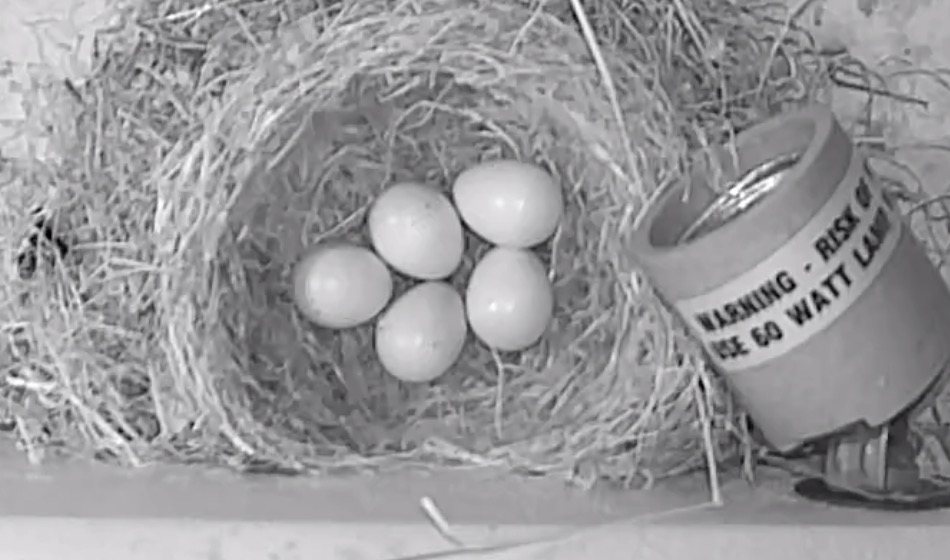
01:18 PT. The complete five-egg clutch, whole for the last time. Laid one per morning, June 2 through 6; incubated eleven days.
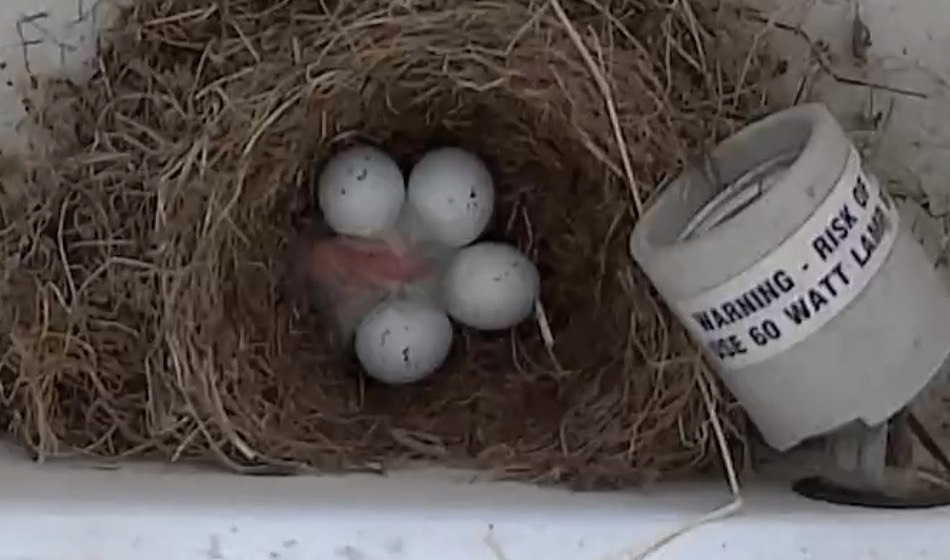
Three and a half hours later it had begun. At 04:45 PT, in early daylight, the cup held four eggs and a chick — a small, naked, pink form low in the center, newly out of its shell, the first of the five.
04:45 PT. Four eggs and, at the center, the first hatchling — pink and naked, just out. The hatch was underway.
This is the thing round 2 was built to catch and round 1 never could: the front of the hatch, the moment the count tips from eggs to chicks, caught from straight overhead. Round 1 arrived at a finished clutch and could only film the cycle from incubation onward. This camera was watching when the first shell broke.
Soon after, both adults were at the nest together for the first time that morning — the male beginning to carry food, the start of provisioning. Through late morning and into the afternoon the cup filled in with chicks as the rest of the clutch followed.
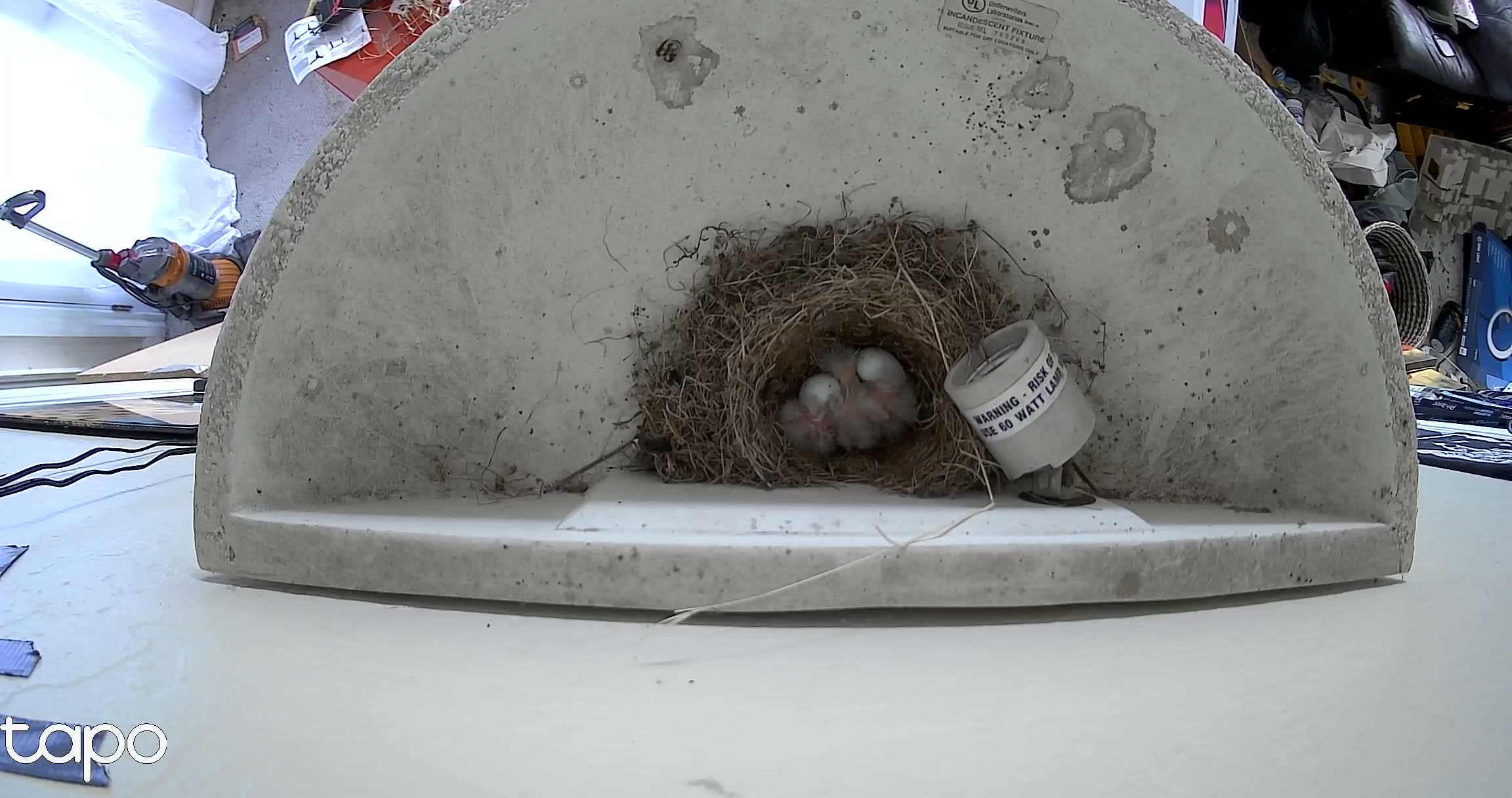
Late morning. Pale eggs still unhatched beside a cluster of pink, naked chicks — the clutch converting to brood, egg by egg.
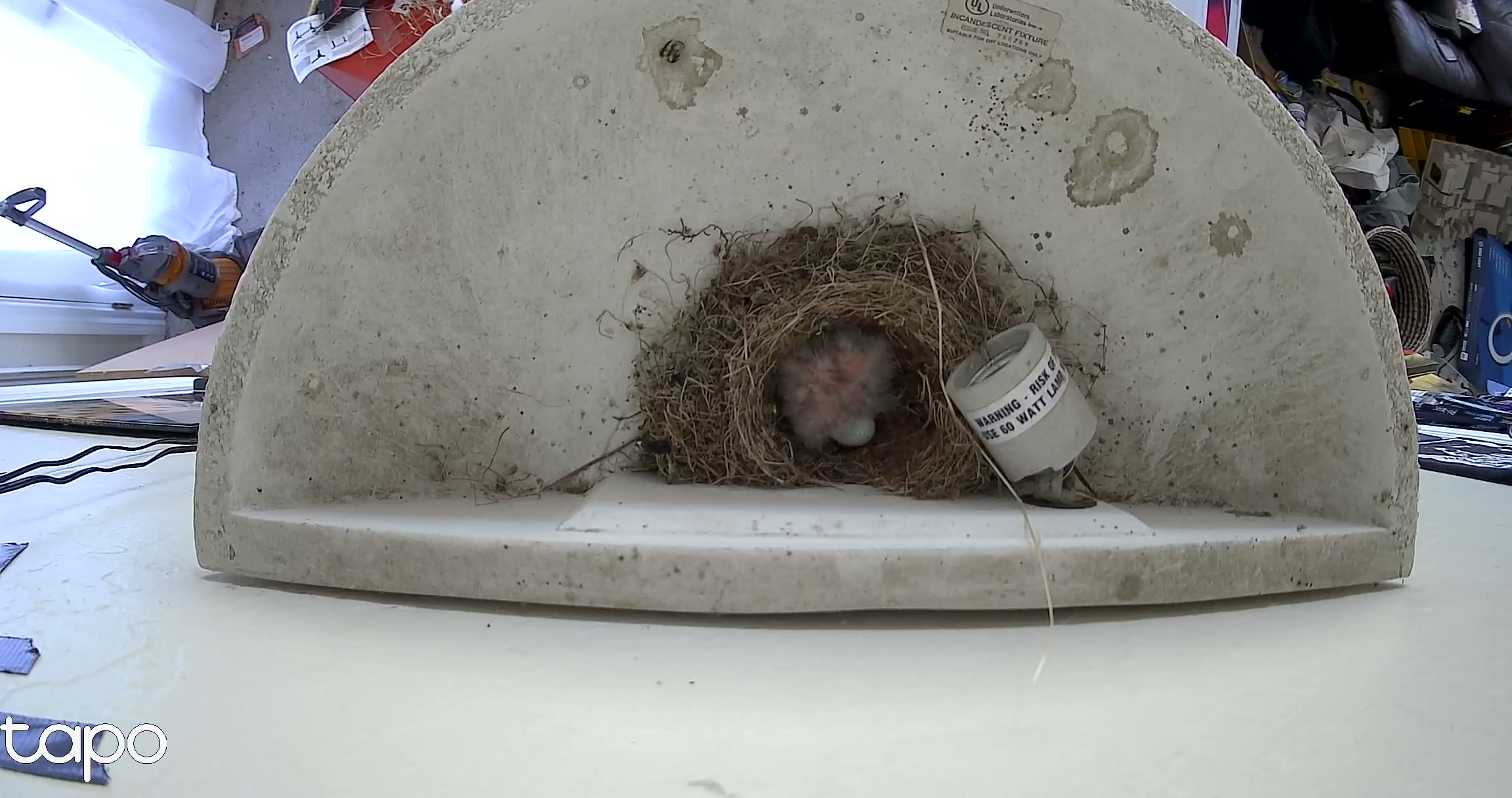
Early afternoon. Mostly chicks now, with the last egg at the edge of the bowl.
A note on the count
For most of the day the cup’s contents are hidden — the adult is down over the bowl in the large majority of clips, brooding the new chicks for warmth, and even when she steps off the chicks pile over whatever eggs remain. The automated pipeline, watching a wide frame through an occluding parent, never saw more than a couple of eggs at once and read the day as a small clutch emptying out. That was the camera’s limit, not the nest’s. The clutch was five — five eggs laid across five mornings, five embryos that started their clocks together when she finally settled to incubate, hatching now across a day or two. Casey confirmed the full count by eye; the two frames above are the proof from straight overhead.
What it means
House Finches play a timing trick: the female delays steady incubation until the clutch is nearly complete, so eggs laid across five mornings all begin developing at the same moment — and a clutch laid over five days still hatches across one or two. Incubation onset was June 7. Eleven days later, before dawn on the seventeenth, the first shell broke.
That is a few days ahead of the June 19–21 window we’d marked on the calendar — close enough to the literature to be unsurprising, early enough to be worth saying out loud.
Day 20 by the numbers
- Clutch: 5 eggs, laid June 2–6 (one per morning)
- Last all-egg frame: 01:18 PT — five intact
- First hatchling: 04:45 PT — four eggs + one chick
- Incubation: began June 7 (Day 10); hatch on Day 20, incubation day 11
- Marked hatch window had been: June 19–21
Watching for tomorrow: how many of the five are out, and the start of continuous brooding — the female down over the chicks for warmth, the male carrying the food.
The cycle is in the hatching phase.